This is default featured slide 1 title

Go to Blogger edit html and find these sentences.Now replace these sentences with your own descriptions.

This is default featured slide 2 title

Go to Blogger edit html and find these sentences.Now replace these sentences with your own descriptions.

This is default featured slide 3 title

Go to Blogger edit html and find these sentences.Now replace these sentences with your own descriptions.

This is default featured slide 4 title

Go to Blogger edit html and find these sentences.Now replace these sentences with your own descriptions.

This is default featured slide 5 title

Go to Blogger edit html and find these sentences.Now replace these sentences with your own descriptions.

Tuesday, 6 August 2019

Shoulder Workout For Man
                           Shoulder Workout For Man


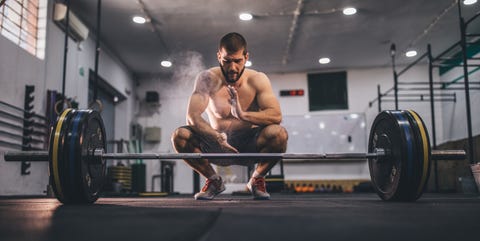
Strong man doing deadlift training in gym


Shoulder Workout For Man and benefits:


Strong man doing deadlift training in gym
HIRURGGETTY IMAGES
Few men relish shoulder day, but neglect it at your peril. Broadening out up top will slim your waist and carve out That cover v shape and  Also, you'll be pleased to know, if you've never properly tested them, gains will come quicker than anywhere else on your body.
The benefits of working you shoulders aren't limited to just gains though. A study by Karolinska Hospital's Department of Orthopedics found that when patients with recurrent shoulder dislocations performed exercises that targeted the rotator-cuff muscles and the deltoid, they were pain  and the number of dislocations they suffered were limited.
So for the good of your health, and to get you the best pump-up up top, we asked PT and osteopath for some of his best exercises and fashioned them into an intense workout that builds muscle fast. Prepare to be top heavy.
How To Lose Weight.

Your Shoulder Muscles

Ok, so we can't start to build up the muscles in your shoulders without knowing what muscles make up  your shoulders. Put simply, the shoulder is made up of two groups of muscles: extrinsic muscles, which originate from the torso, and attach to the bones of the shoulder, and intrinsic muscles, which originate from the scapula and/or clavicle, and attach to the humerus.

The Shoulder's Extrinsic Muscles

Trapezius
Your trapezius is the triangle-shaped musccle that runs down along your spine and across your shoulder blade. You have both a right and left trapezius; these muscles support your arms and shoulders, and are needed to raise your arms.
Latissimus Dorsi
The latissimus dorsi muscle is one of the largest muscles in your back, and is partially covered by the trapezius. Developing your "lats" will make it easier for you to manage your own bodyweight.
Levator Scapulae
Your levator scapulae muscle is located at the side and back of the neck. Its primary function is to lift the triangle-shaped bone located at the back of the shoulder (scapula) that connects your upper arm bone (humerus) with the clavicle (collarbone).
Rhomboids
The rhomboids are the muscles at the top of the back and middle of the shoulder blades. When they contract, they pull your shoulder blades together.

The Shoulder's Intrinsic Muscles

Deltoids
Your deltoid is made up of three main sets of muscle fibres: anterior, lateral and posterior, which are connected by a very thick tendon and are anchored into a V-shape. The deltoid muscle is primarily responsible for arm rotation, but it is also responsible for stopping dislocation and injury to the humerus when carrying heavy loads.
Teres Major
Teres major is a small muscle that's located on the underside of the upper arm. It's sometimes called "lat's little helper" because of its partnership with the latissimus dorsi.
Rotator Cuff
The rotator cuff is a group of muscles and tendons, including teres minor, that surround the shoulder joint. They keep the head of your upper arm bone firmly within the shallow socket of the shoulder.

The 7 Best Shoulder Exercises

With so many muscles to work, no one exercise will work them all, so we've put together a list of seven exercises that target different shoulder muscles. According to White, no shoulder session is complete without these moves, but if you're wondering how to put these into a routine, check out the ultimate shoulder workout below.
Barbell Standing Press: This bodybuilder shape targets your shoulders, but also works your whole body. "It's a great overall mass builder," says White. "These are really good for strengthening your core and increasing overall strength due to the stability aspect of this movement." Start with your hardest move to ensure you've got the core strength to maintain perfect form.
Seated Dumbbell Press: Re-rack your barbell and grab a pair of dumbbell, because they're all you'll need for the rest of the workout. Next grab a bench; sitting down helps isolate the shoulder motion. "These are really good for not only handling a lot of weight, but also having the freedom of using dumbbells," White tells MH. "You can bring them nice and low to get a really full range of motion." Take a load off your feet and put a load on your delts.
Arnold Press Named for their Mr Universe-winning, Predator-killing inventor, the rotating motion at the end of this exercise hits more than the standard press to fill out that v-shape. "It's nice way to do a conventional press while adjusting position to target the anterior deltoids," says White.
 The slower you can perform these raises, the more they'll hurt – and the better you're going to look. "Lateral raises are perfect for isolating the medial part of the deltoid," White explains. "They're more commonly used with a lighter weight and higher reps." You'll still be gritting your teeth by the end of the third set.
Bent over reverse fly: This lateral raise variant will hit you where it hurts, working both shoulders and back. White loves them. "It's one of the best exercises for targeting the posterior deltoid. For more focus on the movement and less on stabilising things, try placing a bench at 45 degrees and perform this movement lying face down on it." Atlas-level shoulders are on the way.
Upright row: Another great mass builder," says White. "Get your elbows higher than your hands for a peak contraction of the deltoid. The upright row also targets the traps." Compound moves like this benefit from heavier fare than the raises, allowing for less reps and bigger weights to keep your delts in shock.
Front raises: White recommends front raises for anyone those that have gone through the routine and feel short-changed in the front. "It’s unlikely that your anterior delts need extra work, so spend more time on your lateral and posterior deltoids. However, if you feel you want to hit your front deltoids harder, then a front raise is the one for you." Again,  help you maintain form for shirt-busting gains.

The Best Shoulder Workouts for Mass

We get it, you're not always looking to build lean, muscular physiques, sometimes you just want to get bigger and look badder. If that's the case and you're looking to build shoulders that the Rock would be proud of then check out these shoulder workouts that build mass, including a workout that "the hardest worker in the room" uses himself.

The Best Dumbbell Shoulder Exercises

If you can't make it to the gym and all you have is a set of dumbbell to work with then don't worry, we have a set of exercises that are perfect for you too.
Two Arm Dumbbell Upright Row: Hold a dumbbell in each hand, resting in front of your thigh. Lift the dumbbells vertically until they're in line with your collar bone, with your elbow pointing towards the ceiling. Lower the dumbbell back down and repeat.
See Saw Press:  just behind your shoulders, palms facing forward. Look up and tilt your body to the left, extending your right arm straight above you. Lower the dumbbell and repeat on the other side to create a see-saw motion. 
Seated Lateral Raise: Sit on a bench and hold a dummbell in each hand by your side. Raise both dumbbells to your side until they're shoulder height. Lower under control and repeat.
Shadow Boxing with Dumbbells: Stand holding two dumbbells at shoulder height with an underhand grip. Adopt a fighting stance and bounce on your toes as you shadow box. Dip and weave to your heart's content. Just don't drop the weights on your toes.
Lying Rear Delt Fly: Lie on a bench, chest facing down, with a dumbbell in each hand underneath your shoulders. Slightly bend your elbows and raise your arms to the side until they're in line with your body. Lower the dumbbells to the floor and repeat.
One Arm Dumbbell Swing: Hold a dumbbell at arms length between your legs. , bringing the dumbbell up towards your head as you straighten your legs. Repeat this movement, then swap sides.
Seated Dumbbell Shoulder Press: Sit on the bench holding two dumbbells at shoulder height with an overhand grip. Press the weights up above your head until your arms are fully extended. Return slowly to the start position.
Spellcaster: Hold a dumbbell in either hand and stand with your legs wide, knees slightly bent. Swing both dumbbells to one side and lift them up as though drawing a circle from hip level to above shoulder height. Swing the weights to the other side, dipping down to your hip before raising them again. Keep repeating this motion.

The Best Dumbbell Shoulder Workout

What good are exercises without a routine to put them into? Check out this dumbbell shoulder workoutand start crafting your bolder shoulders.
Barbell Push Press

Sets: 3
Reps: 6
Rest: 60 secs
Grab a barbell and hold it at shoulder height with palms facing forwards. Set your feet shoulder width apart and slightly bend your knees to inititate the move. Push up with your legs to explosively press the barbell straight above your head. Return under control to the start position.

Seated Dummbell Shoulder 

Reps: 6
Rest: 60 secs
Sit on the bench holding two dumbbells at shoulder height with an overhand grip. Press the weights up above your head until your arms are fully extended. Return slowly to the start position.

Arnold Press

arnold press

Sets: 3
Reps: 6
Rest: 60 secs
Sit on a bench with dumbbells held in front of you, palms facing your shoulders as though you've just finished a bicep curel. Push the dumbbells up over your head while rotating your arms until your palms face away from you. Straighten your arms, pause, then reverse the movement

Two arm bummbell upright

two arm dumbbell upright row

Sets: 3
Reps: 8
Rest: 60 secs
Hold a dumbbell in each hand, resting in front of your thigh. Lift the dumbbells vertically until they're in line with your collar bone, with your elbow pointing towards the ceiling. Lower the dumbbell back down and repeat.
5Lateral raise
Lateral Raise

Use lighter weights for the raise techniques than the shoulder press.
Sets: 3
Reps: 10
Rest: 60 secs
Pick a couple of dumbbells and stand with them by your sides, palms facing your body. Keeping your upper body still – that means no swinging – lift the dumbbells out to your side with a slight bend at your elbows. Lift until your arms are parallel to the floor then slowly lower to the start position.

Seated bend over

seated bent over rear delt fly


Sets: 3
Reps: 10
Rest: 60 secs
Sit down, lean forward and hold a dumbbell in either hand so that they're resting above your feet. Stay bent forward as you raise your arms to the side, lining the dumbbells with your  shoulder Bring the weights back down and repeat

Single Dumbbell raise

single dumbbell front raise (end grip)
Hold end of a  with both hands and let it hang between your legs, positioned shoulder width apart. Lift the dumbbell directly above you, keeping your arms extended, then lower it back down and repeat

Legs Exercises For Man

                             Legs Exercises For Man


Leg Workouts For Men: The 7 Best Workouts For Thicker Quads, Glutes, And Hams

"Leg day"—the very phrase conjures up images of nausea, days of hobbling, and legs that feel like jello. The feelings may be universal, but bodybuilders looking to annihilate legs have countless workout options at their disposal. While most workouts start with some variation of the squat—widely acclaimed as the best lower-body movement—exercise choice, foot position, and advanced training techniques all allow you to emphasize one particular area of the legs over others. That's great if you want to thicken up your quads, fill out your glutes, or beef up your hamstrings because of a weakness—or simply because you want to prioritize an area for a length of time.
Best Fitness Food.
Each of the seven leg workouts below has a different focus. Find one that suits your needs for the next 4-8 weeks before switching to another specialized program. Or simply follow a solid overall mass-building plan like the one listed under Goal 1.
While we can provide any number of formulas for  you're still on your own when it comes to generating the intensity to survive a high-octane workout and withstanding the pain. Nail those last two factors and you'll leave your wheels no choice but to grow.

Goal 1: More Overall Leg Mass

In Legs Exercises Mass-building comes with a set of rules. That means starting your workout with the most challenging exercises and heaviest loads, hitting the thighs from a variety of angles, keeping the volume (number of total sets and reps) high, and training to muscle failure.
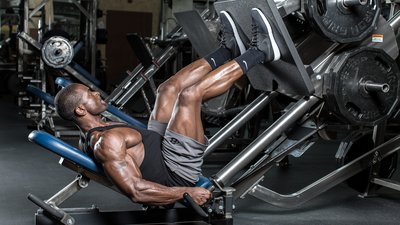
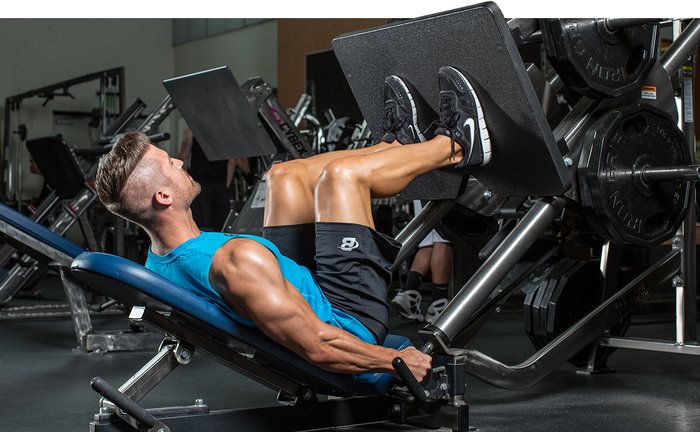
Altering your foot placement on the leg press allows you to recruit leg musculature in slightly different ways. Putting your feet up higher on the sled shifts some of the emphasis from the quads to the hams and glutes because a greater degree of hip flexion/extension is taking place. Also, don't shortchange the depth of your knee bend—which should reach 90 degrees—by going too heavy—that also limits glute and hamstrings activation. Unless you're following a pre-exhaust routine, save the single-joint movements for last.

In Legs Exercises The workout follows a reverse-pyramid protocol, which allows you to take more total sets to muscle failure. As the rep target goes up, be sure to lighten the weight commensurately. The workouts target four muscle groups: quads, glutes, hamstrings, and calves. To shorten the workout, you could eliminate exercises for calves, hamstrings, or both; if so, hit calves and hammies on a different training day.

Notes

  • Do as many warm-up reps as you need, but never take them to muscle failure.
  • Choose a weight that allows you to reach muscle failure by the target rep listed.
  • If you have a spotter, do a few forced reps on your 1-2 heaviest sets of each exercise.

  • Goal 2: Greater Leg Definition

In Legs Exercises Simply doing more work with light weight for high reps isn't enough to get you lean. To keep your metabolism high, you still need that stimulus for building and keeping muscle size. That will help boost excess post-exercise oxygen consumption (EPOC), which roughly translates to the number of calories you burn after your workout is over.
null

That's why the first exercise here is done straight-sets-style, but the rest of the workout consists of supersets with multijoint exercises, along with reduced rest periods and a high volume of work.

Notes

  • Do as many warm-ups as you need, but never take them to muscle failure.
  • Choose a weight that allows you to reach muscle failure by the target rep listed.
  • The first exercise is done with heavier weights, which is key for maintaining muscle tissue and keeping your metabolism high during periods of dieting.
  • Strive to keep your rest periods short and your heart rate up, making this as much a cardio activity as a muscle-building one.

Goal 3: Starting Strong

In Legs Exercises Learning to squat can be a challenge, which is why the simple goblet version is a great place to start. The idea here is to learn and practice movement patterns before loading them with heavier weights or graduating to more complex moves.


This workout is largely machine based, which allows for a more controlled introduction to weight training. As your coordination improves and your muscles strengthen, move on to more challenging free-weight moves and heavier loads.

Notes

  • Do as many warm-ups as you need, but never take them to muscle failure.
  • Choose a weight that allows you to approach muscle failure by the target rep listed, but stop a rep or two short. Proper technique starts to give way when you push to muscle failure, and your priority here is learning good form.
  • Start the workout with more challenging multijoint movements. Because they recruit a larger amount of muscle mass, rest periods are correspondingly longer.

Goal 4: Emphasize Your Quads

In Legs Exercises Because multijoint leg movements work your legs from top to bottom, it's impossible to completely isolate one area over another. However, you can emphasize one area over another. In this case, we're trying to maximize the range of motion of the knee joint while limiting the range of motion at the hip joint. One way to do this is by changing up your foot position on machine exercises.
The front squat also emphasizes the quads more than, say, a barbell back squat does by shifting your center of gravity forward. With heavy partials, you're not going deep, so you can really overload the quads; put on up to 30 percent more weight than you normally use, but go only part of the way down.


This workout follows a reverse-pyramid protocol, which allows you to take more total sets to muscle failure. As the rep target goes up, be sure to lighten the weight commensurately. Note that this workout covers only quads and glutes; add hamstring and calf exercises as desired.

Notes

  • Do as many warm-ups as you need, but never take them to muscle failure.
  • Choose a weight that allows you to reach muscle failure by the target rep listed.
  • This scheme follows a reverse pyramid, meaning you lighten the weight after your first 1-2 sets for slightly higher reps.
  • If you have a spotter, do a few forced reps on your 1-2 heaviest sets of each exercise.

Goal 5: Emphasize Your Glutes

In Legs Exercises While you tried to minimize hip flexion/extension in the quad-focused workout, here you want to maximize it. Do that by choosing exercises and foot positions that allow the glutes to be trained through their full range of motion. Be sure to descend fairly deep in all squatting motions; otherwise, you'll limit glute activation.
The workout again follows a reverse-pyramid protocol, which allows you to take more total sets to muscle failure. As the rep target goes up, be sure to lighten the weight commensurately. The last exercise, the Romanian deadlift, is considered a hamstring exercise, but it focuses on the upper region as well as the glutes, especially the glute-ham tie-in.

Add knee-joint hamstring and calf exercises as desired for a complete leg workout.

Notes

  • Do as many warm-ups as you need, but never take them to muscle failure.
  • Choose a weight that allows you to reach muscle failure by the target rep listed.
  • This scheme follows a reverse pyramid, meaning you lighten the weight after your first 1-2 sets for slightly higher reps.
  • If you have a spotter, do a few forced reps on your 1-2 heaviest sets of each exercise.
  • Goal :6
In Legs Exercises Hams shouldn't be an afterthought, and not just for aesthetic reasons; they also support knee-joint integrity. Most bodybuilders are familiar with the family of leg-curl movements, which can be done lying, seated, standing, or with one knee supported on a bench. Don't forget to work the hams from the hip joint as well, which means doing Romanians.
Often confused with the stiff-legged deadlift (a lower-back exercise) and even the conventional deadlift (with Romanians, the plates never touch the floor), it's an effective move for the upper hams where they tie in with the glutes. Good form is critical with RDLs—keep your back flat and never try to achieve excessive range of motion if it causes your back to round.


Don't forget, your hams also get worked when you squat deep and when you control the speed of the descent in squatting motions. However, that amount of work isn't enough to let you skip dedicated hamstring exercises. If you decide to split your quad and ham workouts into two different days, separate them by at least 48 hours to ensure full recovery. Or tack this workout onto the end of a quad/glute workout, occasionally even doing it prior.
This workout again follows a reverse-pyramid protocol, which allows you to take more total sets to muscle failure. As the rep target goes up, be sure to lighten the weight commensurately.

Notes

  • Do as many warm-ups as you need, but never take them to muscle failure.
  • Choose a weight that allows you to reach muscle failure by the target rep listed.
  • This scheme follows a reverse pyramid, meaning you lighten the weight after your first 1-2 sets for slightly higher reps.
  • If you have trouble doing the floor glute-ham raise at the end of your workout, do it earlier when you're less fatigued.
  • Alternate seated and lying leg curls for the standing single-leg curls so you're including all three at least once every three workouts.
In Legs Exercises This workout starts by targeting just your quads with a single-joint movement. By the time you get to the multijoint exercises that follow, your quads will already be highly fatigued—but your glutes and hams will have been spared. Neither muscle group will be the weak link in those follow-up exercises; you'll be pushing your quads, however, to their limit.

This more advanced method of training is a great way to rise above a plateau. Even though you'll be significantly stronger on your leg extensions—which you normally do toward the end of your workout—keep the reps relatively high to avoid overtaxing the knee joint. With the quads prefatigued, everything that follows will feel harder, so lighten the weights up here, too.

Notes

  • Do as many warm-ups as you need, but never take them to muscle failure.
  • Choose a weight that allows you to reach muscle failure by the target rep listed.
  • By flip-flopping the exercises, you'll be a little stronger on your single-joint moves but weaker on multijoint ones, so adjust your weights accordingly.

Wings Exercises For Man

                                Wings Exercises For Man


Earn Your Wings With This Mass Building Back Workout!


Enter a big gym or fitness center any day of the week. Granted, you'll see scrawny guys doing biceps curls with bad form until they're red in the face and their shoulders are out of whack. Next time you see them they'll be doing "bouncing" bench press with more weight on than they can handle, and during that workout, they'll probably throw in some more biceps curls just to make sure to keep them "guns growing". But tap them on their back, which they completely have neglected to train, and they'll be in a world of hurt.
How to gain weight.
Ok, I may be exaggerating, but I'm sure you know what I'm aiming at here. The back is such a huge part of the body the last thing you want to do is to neglect it. Instead you want to aim your focus on it and build a back that's thick and big like a barnyard door! You want your lats to look like they're about to burst out of your skin, and you want that shirt you bought just recently to feel even tighter a month from now. Or maybe it just won't fit anymore by then? It's time to go B-A-C-K and earn your wings!

Your Mission

Your mission is simple Wings Exercises 
 hit that back of yours hard and heavy and never look back (no pun intended)! Sure, it may sound easy but it actually takes a lot if you want to see results. This is a workout that works, but it's not a one-time deal. Use it for a handful of weeks and then find another back routine for a while before you go back to this one again.
You need to hit this one mercilessly and then get the proper amount of sleep , not to mention that you have to eat like a Cyclops, (I hear they eat loads!). But both you and I know that you can do this, so get focused, because your mission is about to begin!

Get Focused, Because Your Mission Is About To Begin

The Workout

Pull-ups are the God of lats and that's final. You need to do them in order to bring those lats out and to get that muscular look that normal guys without the will-power or the discipline would die for. If you can't do one then I'm sorry but this workout is not for you. What you need to do is to train yourself at doing pull-ups and increase the amount of reps little by little.

Pullups

What we're going to do here is 50 Pull-ups to start off this workout with. I can hear you swearing from here but take it easy; you don't have to do them all at once. No, we're going to do 10 reps at a time for 5 sets with minimal rest in between each set. So let's get cracking!
All done? Great! It's time to bring out the heavy artillery and with that I'm talking about the mighty Deadlift. While this is a great exercise for your lower back, wings exercises are important.it's also a mass building exercise that you, as a bodybuilder, just should not do without. It's important that you do 1-2 warm up sets here and that you use perfect form because this is an exercise that can literally make you or break you! So please be careful.

Barbell Deadlift

We will be doing a pyramid set here that'll consist of 4 sets altogether. For the first set you'll be doing 10 reps, then 8, then 6 and then 4 reps, and you will increase the weight as you go. Rest approximately 2-3 minutes between each and every set. Use perfect form and don't hold back on the weight.
Are you ok? You sure look a little pale there. Well, we're going to get some more blood pumped into those muscles of yours right away with some Seated Cable Row. We going to be doing a pyramid set here too, just like we did with Deadlift. This means that you'll be doing 4 sets again, and this time the rep count will also be 10, 8, 6 and 4 reps. Increase the weight for each set. You know the drill.wings exercises are important.

Seated Cable Rows

Two more exercises to go and then you're all done. Feels great doesn't it? wings exercises are important.Next up is Wide-Grip Pulldowns Behind The Neck and you'll be doing 3 sets with 8 reps per set. So be seated, grab the bar with a wide grip that you're comfortable with and slowly start pulling the bar straight down until it touches your neck. Then return the bar to the starting position in a slow fashion. Rinse and Repeat.

Wide-Grip Pulldown Behind The Neck

All right, one more exercise to go. wings exercises are important.Seated One-Arm Cable Row is the name of the game here and you'll be doing 3 sets of 10 reps. Instead of a bar you need a handle here, and the exercise itself works just like Seated Cable Row only that you just use one arm at a time. So start with your right arm and pull the handle back until your arm is at a 90-degree angle, then return to starting position. After 10 reps change to your left arm and do 10 more reps, then rest

Tuesday, 30 July 2019

Cardio Exercises For man

                      Cardio Exercises  For man 

Cardio Exercises  For man 


Doing your Cardio Exercises  is an attractive option, offering convenience as well as a way to save money and time. Luckily, a good cardio workout doesn't have to require a ton of space or fancy equipment, and with a little creativity, you can put together a fitness routine with a wide range of effective  Cardio Exercises that will tone muscle, burn calories, and help you lose weight. Below are some home cardio exercises you can do anytime.
Gym personal Training

Jumping Jacks


Woman doing jumping jacks
MamiEva/Getty Images

What: Repeatedly jumping the feet wide while circling the arms overhead, then back again
Why: Jumping jacks burn about 100 calories in 10 minutes and no special equipment or skills are needed.
Requirements: A good pair of shoes, a conditioned heart
Precautions: Jumping jacks are high impact, which may tax the joints. They may also remind you of elementary or high school gym class traumas.
Variations: Plyo-jacks (squatting then jumping in the air), stepping the feet out rather than jumping, holding a medicine ball, push-up jacks (jumping the legs together while doing push-ups)
Best Ways to Use Jumping Jacks in a Workout:
  • In a Cardio Circuit: Use jumping jacks in a circuit, doing them for 30-60 seconds and alternating them with other cardio exercises such as marching, jogging, jumping rope, etc. Try a different variation of jumping jacks each time, repeating the circuit for 10-30 minutes.
  • In a Strength Circuit: Alternate 30-60 seconds of jumping jacks with strength exercises such as squats, lunges, pushups, and dips for 10-30 minutes.
  • In Your Regular Workout: Add a  to your regular cardio or strength workouts by adding a minute or more of jumping jacks throughout the workout or at the end.

Jump Rope


Jump Rope


What: Turning a rope with handles repeatedly while jumping over it and (optional) chanting rhymes
Why: It's great cardio, burning about 220 calories in 20 minutes. Jump ropes are inexpensive, travel well, require no special skills, and can be used anywhere you have space.
Requirements: A jump rope, a good pair of shoes, patience, and practice
Precautions: Jumping rope is Cardio Exercises and requires practice. It looks easy, but beginners may have all the grace of a pigeon-toed elephant and trip often. For the best results, turn the rope with the wrists, not the arms, and land softly. Only jump high enough to clear the rope.
Variations: Jumping on one foot, alternating feet, crossing the feet, jumping with high knees, double turning the rope
  • In a Beginner Circuit: Alternating 10-30 seconds of jumping with marching in place for 5-10 circuits. Gradually work up to longer jumping sessions
  • In a Cardio Circuit: Alternate 30-60 seconds of jumping with other cardio exercises such as marching, jogging, jumping jacks, etc.
  • In a Strength Circuit: Alternate 30-60 seconds of jumping with strength exercises, such as squats, lunges, push-ups, and dips.  

Jogging in Place


Jogging in Place
Verywell / Ben Goldstein

What: Jogging in a stationary position
Why: It's simple, accessible, gets the heart rate up, and is a great way to warm up for more intense exercise.
Requirements: A good pair of shoes
Precautions: It's high impact, which may tax the joints, and it can be boring. Because there's no forward motion, it isn't as intense as jogging outside.
Variations: Press the arms overhead, high knees, butt kicks, wide knees
Best Ways to Use Jogging in Place in a Workout:
  • As a Warm Up: Start by marching in place, then slowly change 
  • In a Cardio Circuit: Alternate jogging in place with other cardio exercises, such as marching, jogging, jumping rope, step touches, etc. Do each for 30-60 seconds, repeating the circuit for 10-30 minutes.
  • In a Strength Circuit: Alternate 30-60 seconds of jogging in place with strength exercises, such as squats, lunges, push-ups, and dips for 10-30 minutes.
  • As an Active Break: Try jogging in place when you need an active break at work or at home.

Burpees


Burpees


What: Squatting to the floor, jumping the feet to a plank position, jumping back in, and standing up
Why: , burning 100 or more calories in 10 minutes (if you can stomach 10 minutes of this exercise).
Requirements: A good pair of shoes, experience with high impact exercise, an iron will
Precautions: They're really, really hard.
Variations: Stepping the feet back instead of jumping, jump up at the end, add a  use equipment for an additional challenge (medicine ball
Best Ways to Use Burpees in a Workout:
  • Sparingly: As mentioned above, they're really, really hard, so pace yourself.
  • In a Cardio Circuit: Incorporate 30-60 seconds of burpees every 3-4 minutes of a cardio circuit that includes other exercises, such as marching, jogging, jumping rope, step touches, etc.
  • In a Strength Circuit: Add 30-60 seconds of burpees for every 3-5 strength exercises, such as squats, lunges, push-ups, and dips for 10-30 minutes.
  • In : Do 30-60 seconds of burpees, rest for 30-60 seconds, and repeat for 10 or more minutes. You can also use burpees in a  workout.

Mountain Climbers


Mountain Climbers
Verywell / Ben Goldstein

What: Running the knees in and out from a push-up position.
Why: Mountain climbers raise the heart rate while building strength and endurance in the core. No special skills are needed.
Requirements: Strong wrists
Precautions: This exercise can tax the wrists, arms, and shoulders, as well as the core.
Variations: Alternate jumping each foot forward and back; use sliding discs, paper plates or towels; combine them with other exercises such as burpees, or planks
Best Ways to Use Mountain Climbers in a Workout:
  • In a Cardio Circuit: Add mountain climbers to your cardio circuit, doing them for 30-60 seconds each time.
  • In a Strength Workout: Combine mountain climbers with push-ups or planks to add intensity.
  • In Combinations: For high intensity, do a series of mountain climbers with burpees, alternate 10 push-ups with 10 mountain climbers, or add them 

Squat Jumps


Squat Jumps


What: From a squat position, jump as high as you can, landing back into a squat
Why: Squat jumps are  that will raise the heart rate, burn calories, and increase power in the legs. No special skills are needed.
Requirements: Happy knees, experience with high impact exercise, and a good pair of shoes
Precautions: This exercise is high impact and high intensity, and requires strong joints and a strong heart. With any plyo exercise, land softly to protect the joints.
Variations: Prisoner squat jumps (with your hands behind your head), froggy jumps (touch the ground when you squat), on a BOSU
Best Ways to Use Squat Jumps in a Workout:
  • In a Cardio Workout: Incorporate 30-60 seconds of squat jumps into your regular cardio workout or in a cardio circuit with other exercises, such as marching, jogging, jumping rope, step touches, etc.
  • In a Lower Body Workout: Add 30-60 seconds of squat jumps after every 3-5 lower body exercise, such as squats, lunges, or deadlifts to increase intensity, power, and strength.
  •  Do 30-60 seconds of squat jumps, rest for 30-60 seconds


Bear crawl
Verywell / Ben Goldstein

What: Squatting to the floor, walking the hands out to do a push-up, walking the hands back. and standing up...like a bear
Why: They get the heart rate way up while building strength and endurance.
Requirements: Experience with high-intensity exercise
Precautions: This move is tougher than it looks and the intensity accumulates quickly.
Variations: No push-up, push-up on the knees, keeping the knees down as you crawl in and out
Best Ways to Use Bear Crawls in a Workout:
  • In a Cardio/Strength Workout: Incorporate 30-60 seconds of bear crawls into your regular cardio workout or in a cardio circuit with other exercises such as marching, jogging, jumping rope, burpees, etc.
  • In an Upper Body Workout: Add 30-60 seconds of bear crawls for every 3-5 upper body exercises such as push-ups, chest presses, or dumbbell rows to increase intensity, power, and strength.
  • In High-Intensity Interval Training: Do 30-60 seconds of bear crawls, rest for 30-60 seconds, and repeat for 10 or more minutes, or alternate bear crawls with other high-intensity exercises such as burpees or squat jumps. You can also use bear crawls in a Tabata workout.

Kickboxing


Front kick with lunge
Verywell / Ben Goldstein

What: Punching, kicking, and combinations thereof against a bag, the air, or (risky) another person
Why: can burn more than 100 calories in 10 minutes at the right intensity, requires no equipment, and can help you get out your aggressions.
Requirements: Basic knowledge of kicks and punches
Precautions: Extending the arms and legs all the way during punches and kicks can stress the joints.
Variations: Endless combinations of kicks, punches, or both
Best Ways to Use Kickboxing in a Workout:
  • Create Your Own Cardio Workout: If you're familiar with kickboxing, make your own combinations: Jab-cross-hook-upper, jab-cross-hook-knee smash-front kick, squats with front kicks, jumping front kicks, or side kicks.
  • Exercise Videos: Familiarize yourself with different elements of kickboxing with these instructional videos:You can also try home kickboxing workout routine videos.

Staircase Exercise


Climbing steps
Jamie Grill/Blend Images/Getty Images

What: Using a staircase for everything from cardio to strength training
Why: Walking stairs is an excellent cardio workout and you can use the steps for a variety of other exercises.
Requirements: A staircase with at least one step
Precautions: Watch for cats, dogs, toys, and children. Make sure there's a handrail for safety.
Variations: Use a fitness step platform instead of actual stairs
Best Ways to Incorporate Stairs Into Your Workout:
  • In a Cardio Circuit: If you have a longer staircase (more than six stairs), work it into a cardio circuit: Alternate 1-2 laps up and down with other cardio exercises, such as jumping rope, , jumping jacks, etc.
  • In : Run or walk up the stairs as fast as you can and walk back down to recover, repeating for 10 or more minutes. You can also use just one step: Jump onto the step with both feet and step down, or stand sideways with one foot on the step and jump, turning 180 degrees, and landing with the other foot on the step.
  • In Strength Workouts: Use one step for push-ups, lunges, dips, squats, step ups, and more.

Bonus: Run, Walk, Play


Family biking outdoors
Seb Oliver/Cultura/Getty Images

What: The great outdoors
Why: There's fresh air out there and it's fun to actually go somewhere when you're exercising.
Requirements: A door to the outside world, a decent pair of shoes, sunglasses, and sunscreen
Precautions: Watch out for dogs, heat, cold, chatty neighbors, distracted drivers, and bikers.
Variations: Endless
Best Ways to Exercise Outdoor, and incorporate hills and sprints to increase intensity. 
  • Run: If you're a , start with a  program to condition your body. 
  • Circuit Training: You're not just stuck with walking or running outside. You can also incorporate strength exercises like push-ups, dips, and burpees with your walks or runs to add intensity and make things more interesting. 
  • Play: Tossing a Frisbee or a football, chasing the dog or the kids, or a day at the park makes exercise more fun.